
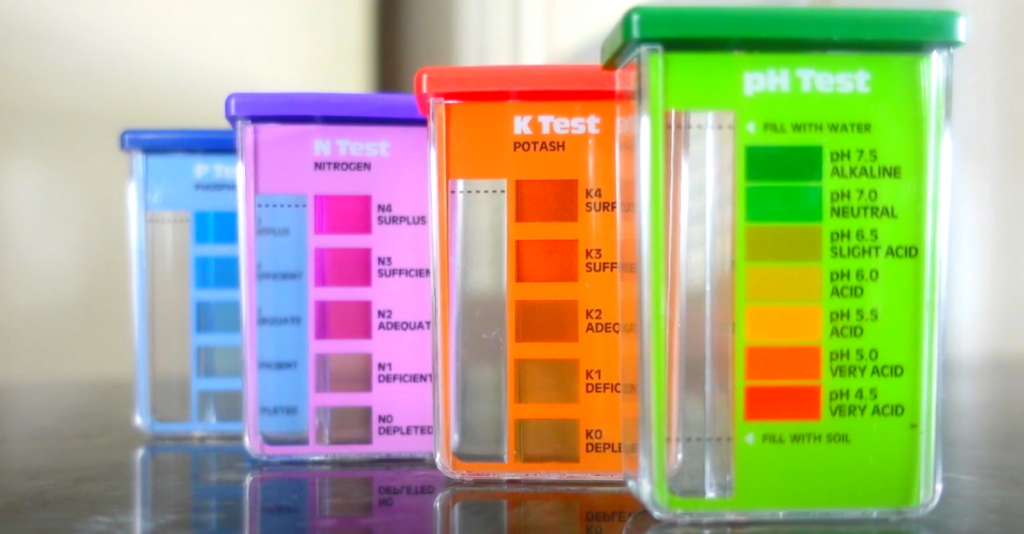
Soil delivers the majority of the nutrients plants need for growth. By learning how to test the ph of your soil at home, you can find out how well your plants are able to absorb the nutrients available in your soil.
Why Test Your Soil?
Just like your refrigerator needs to be set at an ideal temperature so that food neither spoils because it’s too warm or freezes things freezes because it’s too cold, finding the ideal pH range for your soil ensures your fruits, vegetables, and herbs maintain an environment that keeps them:
1. Alive (a very good thing).
and
2. Happy, healthy and able to fight off disease.
When the pH of your soil is either too low or too high, nutrients that your plants need will either be delivered too quickly and at toxic levels or not even released. Both are outcomes you want to avoid. When you use a pH soil test kit, you can find out how your soil measures up in terms of how well your plants are able to absorb the nutrients available in your soil. This is because ph is the key to unlocking the availability of whatever nutrients your soil will deliver to the plant from the fertilizers and amendments you add.
What is pH?
“Ph” may be a forgotten back of your high school science textbook, glossary term.
Oh, just me?
Well, get ready for an unfussy, very straightforward explanation that you may actually remember for the long term. First let’s start by looking at the big picture, then we’ll dial in.
Ph refers to a scale of 1 to 14 that measures substances on a sliding scale of how acidic or basic something is. The number right in the middle of this scale, 7 is, you guess it, neutral. Anything below a pH of 7 is acidic and anything over a pH of 7 is basic. In either direction, the farther away from the neutral 7 zone means the acidic or basic quality is stronger by leaps and bounds.
I can tell your tracking, good job, let’s keep going.
What’s the difference between an acid and alkaline?
Now, you’ve gotta hold your assumptions that one side of this scale is better for the other, because it isn’t. Just like there are people that prefer one type of climate over the other (myself leaning towards a 4 season, trees for days, views of the mountains and walkable trails nearby kinda gal) the good Lord, in his infinite wisdom, afforded plants their disposition of preference as well.
Let me nerd out for 30 seconds, because I think what I’m about to share next, will anchor your understanding and appreciation of pH as a real thing, and not just some fairly abstract concept just for master gardeners or Science pHd’s. Consider the following:
- Did you know that the human body works best at a slightly alkaline pH?
- Or that our blood generally holds about a 7.3 pH but relies on a buffer system of minerals to maintain that pH?
- And, more interestingly, even within your own body, different organs require different pHs?
Yup. So, while your blood is hanging out around a 7-ish ph, your stomach requires a very acidic pH of 1.5 to 2.5 to fight off the harmful bacteria and viruses you encounter everyday and maintain good gut health. It’s only within this very acidic environment that certain enzymes are activated and able to digest the food you eat to release and distribute the nutrients you need to function. When your gut health is good, you’re less likely to experience damaging inflammation and lapses in immunity.
Who knew pH affects so much?
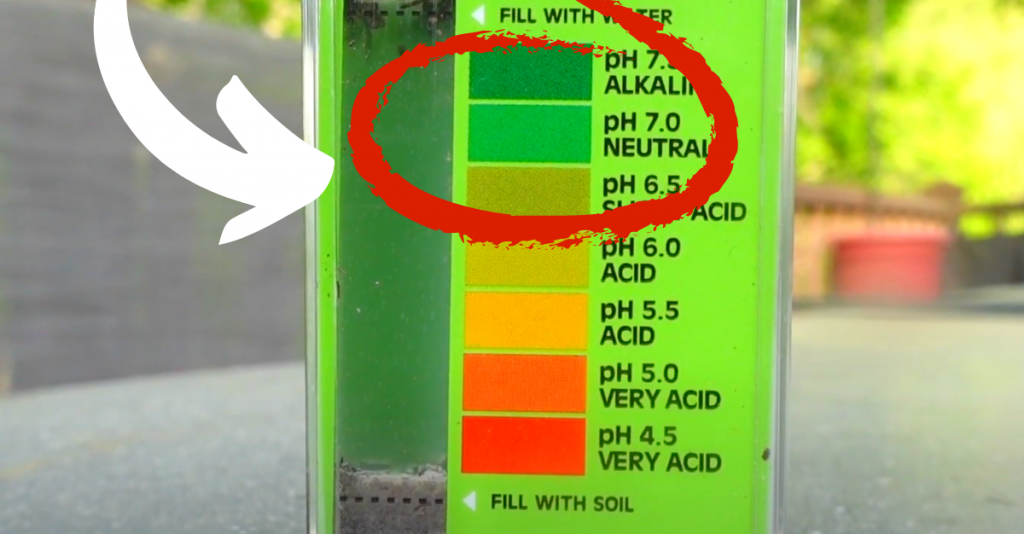
Is it better to be alkaline or acidic?
Just like the human specifics have different organs that prefer certain pHs, the same is true for plants. Some crops like carrots, tomatoes, and cucumbers, prefer a mildly acidic soil environment, while other plants, like asparagus, beans and brussel sprouts require a more alkaline environment to thrive. You’ve got to be able to give each plant what it needs so that you create environmental conditions that keep your plants happy, healthy, and strong enough to fight off disease.
Essentially, pH acts as the first line of dense that allows certain nutrients to be dissolved, neutralized or eliminated according to what that plant prefers. In humans, factors like age, prolonged stress and long term antacid use impact stomach ph and nutrient intake. With plants, environmental factors like climate, mineral content, and soil microdiversity diminish the soil’s ability to absorb nutrients.
And that’s why you’ve gotta be fierce about maintaining the proper pH. Because if you don’t know (or can’t keep) the pH steady, plants won’t be able to absorb minerals, proteins, vitamins or perform the necessary functions to fight off inevitable bacteria and disease or achieve maximum health and crop production.
I get that this summary may be “too basic” for some, so if you need to verify (or have more technical questions, take a look here this article or this review that are helpful, but will give you that technical satisfaction.
Onwards, farmgirls.
How does soil ph affect plant nutrition?
Soil delivers the majority of the nutrients plants need for growth. By using an Preparing Your Soil Samples This isn’t a tedious process, but it is something you do need to be slightly intentional about. Here’s what most at home soil test kits will recommend: That’s it! As a general measure, absolutely! As a specific metric rounding off to the nearest thousandth, no. Luckily, as long as your soil is within a range of the acidic or basic, home growers can achieve a thriving garden without absolute precision several decimal places out. Look for test kits at your local garden center or home improvement store. But, if you get the itch to compare how a home sample kit compares to a professional evaluation, those results aren’t hard to attain. Soil sampling should be completed as instructed in the directions. I use a Alternatively, you can take soil samples to your local extension service office and, in most cases, they will perform a pH test for a nominal fee or free. Before you arrive, just be sure to confirm how many samples their test requires and how to take and package your samples by calling the extensive service or reviewing website instructions. If you’re interested in comprehensive testing which will give you a complete nutrient profile of macro-nutrients like NPK, micro-nutrients and physical characteristics of the soil (sandy, clay, loam, etc) you can schedule this as well. Yes! You can make your own pH indicator using red cabbage. You can find instructions here. I find this method great if I’m in a pinch, have cabbage on hand I’m resisting from fermenting, and am casually curious about how my soil is doing (especially if I was a bit ambitious or experimental with a fertilizer–hey, it happens). I still keep my Tips for soil ph testing at home So, happens when your ph readings aren’t ideal for what you want to grow? Is all gardening hope lost? Nope! The good news is that soil is very adaptable and resilient; you can gradually change the pH of soil over time. Growing cover crops like buckwheat, crimson clover, or peas and legumes naturally enrich the soil with nitrogen. And, adding used coffee grounds is a great way to add acidity to the soil. Better yet, you can make your own using items you can easily source from your kitchen scraps, the grocery or pet store. Check out 6 homemade fertilizers you can make to keep your garden costs low (or even better, free). The Rapitest Soil Test Kit comes with a feeding fertilizer recommendation chart that provides suggested quantities for specific fertilizer sources based on your soil test starting level (depleted, deficient or adequate) results. If a significant amount of a particular nutrient is needed, split up the application over several weeks and test nutrient levels every 30 days. Keep in mind that you’ll also need to factor in the texture of your native soil to determine appropriate amounts. Is it mostly sandy? Loamy? Clay? A combination of all three? If you don’t know, the good news is that you can easily assess your soil texture by feel. The exact steps for determining soil texture by feel can be found on the Natural Conservation website. Within a few minutes, you’ll confidently know which of the 12 soil textures you have. Soil pH levels vary depending on the location of the field and the time of year. As such, the following are excellent opportunities to test your soil: Always keep the results of your soil tests so that you can notice (and monitor) any changes in the fertility of the soil. You’re now ready to test your soil and minutes away concretely knowing if your soil conditions are alkaline, neutral or basic and which of the three macronutrients you may need to add. Check out how to make your own homemade fertilizers where you’ll find 6 easy homemade recipes to make your own nitrogen, potassium and phosphorus amendments.Are at home tests reliable?
Can you test your ph without purchasing a kit?
How do you raise (or lower) the pH of your soil?
How often should I test my soil?


